

Presenting Reason
21 year old South Asian female, came into clinic today for an urgent review. Has been complaining of noticing left sided cluster of lights and L sided headaches which have been occurring for the past week and getting worse. Nil history of trauma, nil sudden weight loss, fever or night sweats and is recovering from flu which occurred 2 days prior to onset of symptoms. Patient complaining of seeing a grey line and patterns in visual field for the past 3 days. Feeling slightly nauseous, nil headache. GP concerned of possible stroke.
Medical History
- Nil Allergies
- Unremarkable medical history
- Unremarkable family history
- Current Medication: Thyroxine 25mg daily
Clinical Exam
- Vision c gls
R 6/6 (N5) L 3/60 (<N48) - Glasses Prescription
R -1.75DS / +0.50DC x 80
L -0.75DS / +0.75DC x 92 - IOP c Goldmann Applanation
R 21mmHg L 23mmHg - Nil RAPD
- Angles Open
- Cover test and ocular motility full
Clinical Tests
Macular Scan
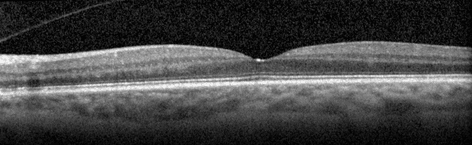
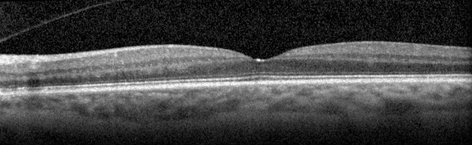
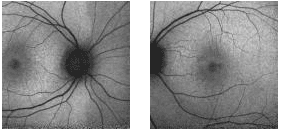
Fundus Autofluorescence
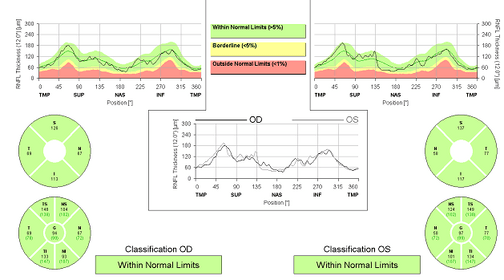
Optic Nerve (RFNL scan)
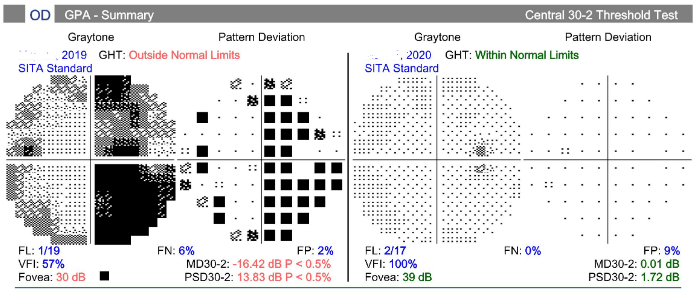
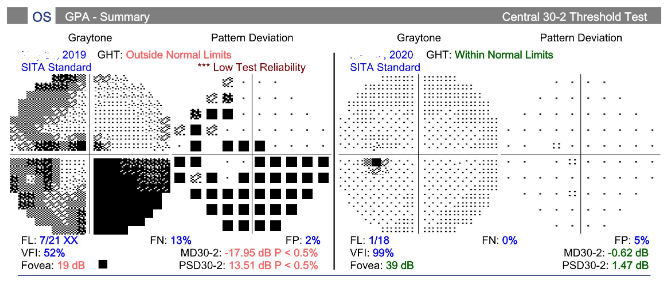
Visual Field (HVF30-2)
Diagnosis:
Treating Ophthalmologist for this case: Dr Terence Tan
Rathke cleft cyst with pituitary macroadenoma
Visual field demonstrating a right incongruous hemianopia. Anterior segment examination highlighted a clear cornea, media and anterior chamber. Urgent neuroimaging requested and was diagnosed with pituitary adenoma accompanied by a benign Rathke cyst. Patient went back home overseas to have a transphenoidal sub-total resection of pituitary macroadenoma. Advised patient to come back for yearly monitoring of visual field defect, which has now resolved over 3 years since initial presentation and current vision is 6/4 both eyes.
What is a Rathke cyst?
A Rathke cyst is a benign fluid filled growth that develops between the pituitary gland. They are formed during fetal development in the womb are often picked up during brain MRI scans. During normal development the Rathke pouch disappears but in a rare few instances it leaves a space which fluid can fill and grow over time.
Signs and Symptoms?
As the fluid in these cysts grow in size, they can begin to press on the optic nerve fibres and cause visual disturbances, visual field defects and persistent headaches and/or migraines. Since it is also located so intimately near the pituitary gland, it can affect hormonal levels as well and cause symptoms like increase in weight, irregular menstruation, delayed puberty, and trouble regulating body temperature to name a few.
Prognosis?
Often if the Rathke cysts are small enough and don’t grow in size they are will often be left untreated and undiagnosed. In the case of this patient, surgical intervention was required to remove the pituitary tumour however the Rathke cyst can be drained and removed itself.